What is DevOps, and why is it important?
The name “DevOps” combines the terms “development” and “operations,” but it covers a far broader range of principles and procedures than those two terms do alone or together. Security, teamwork, data analytics, and many more ideas are all part of DevOps.
DevOps is a set of methods for speeding up the path an idea takes from development to a production environment where it can actually be useful to users. That idea might be a new software feature, a request for an improvement, or a bug fix. These methods call for frequent communication between development teams and operations teams, plus a willingness on both sides to see the other’s problems. They also need scalability and flexible provisioning. Self-service and automation are what make DevOps pay off most for the people carrying the heaviest load.
What connection exists between containers and DevOps?
DevOps speeds up the process of taking an idea from conception to deployment. It rests on standardizing environments for the whole of an app’s lifecycle and automating repetitive administrative work. Containers can give you those uniform environments, but managing them needs a platform with built-in automation and support for any infrastructure.
What is the culture of DevOps?
DevOps depends on a collaborative environment that supports open source ideals and open, agile working practices.
You can build a DevOps culture by modeling it on the culture of open-source software projects. In open-source communities, collaboration usually takes the form of open information exchange. Cultural changes help too: making decisions more openly, taking the fear of failure out of experiments, or putting a reward system in place that builds trust and cooperation. Some businesses bring in digital transformation consultants to help with work like this.
Your development and operations teams can help build an open culture if the right leadership and incentive programs are in place. But DevOps works best when that culture reaches the whole company. DevOps is for everyone, even if the word only names development and operations.
What is the DevOps process?
Modern application development needs different procedures than earlier methods did. Agile methods are popular with software development teams, and for those teams DevOps is not an afterthought. The first of the Agile Manifesto’s 12 principles is about satisfying the customer through early and continuous delivery of working software. Because of this, DevOps teams place a high value on continuous integration and continuous deployment (CI/CD).
Changing your development and operational procedures on its own is not enough, though. If you want to truly improve the way you provide software, you have to think about the whole system. That means DevOps will bring changes to the teams that provide end-user support and to the business units that ask for development work. What holds it together is an ongoing feedback loop between the firm and its customers.
The task itself won’t need to change; the way you do it will. The type of work you take on will change as well. With DevOps you can build new forms of software that suit this continuous delivery cadence, rather than merely speeding up production of the same old monolith.
Because of this, DevOps teams frequently use a microservices architecture and connect the services with APIs. Teams produce work more quickly when they concentrate on smaller chunks of functionality, so you have to pay attention to how services and APIs are maintained and have a plan for integrating everything, such as agile integration. These sorts of changes might be difficult to implement, but the right technology can help you get going right away. You can speed up your operations using automation, and eventually move your DevOps workloads to the cloud. According to an IDC report, 85% of IT executives believe automation is essential to their DevOps approach. That is what lets an infrastructure endure the continuous code changes DevOps brings.
What are the DevOps platform and tools?
The success of DevOps depends on choosing tools that fit your processes. To keep up with quick development cycles, your operations teams need very flexible platforms and have to handle their infrastructure the same way development teams treat their code. Manual deployments are cumbersome and prone to mistakes. Automation can make platform deployment and provisioning simpler. Site Reliability Engineering (SRE) is the practice of running those manual jobs with software and automation instead, and an SRE strategy backs up what a DevOps team is trying to do.
How does continuous deployment help DevOps scale?
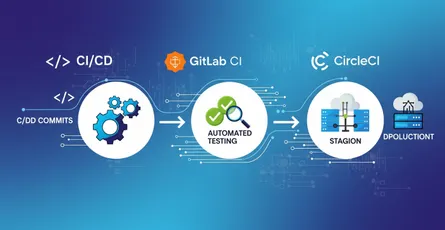
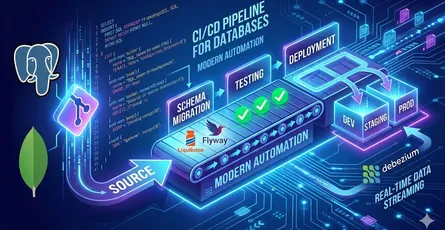
A continuous integration and continuous deployment pipeline (CI/CD) is one of the main results of applying DevOps. With CI/CD you can release apps to consumers often and check the quality of your software with little to no human involvement. CI/CD adds continuing automation and continuous monitoring throughout the lifespan of apps, from the integration and testing phases through delivery and deployment, so you find and fix issues and defects quickly. The development and operations teams collaborate in an agile manner to support these connected processes, which are collectively referred to as a “CI/CD pipeline.”
What is the DevOps lifecycle?
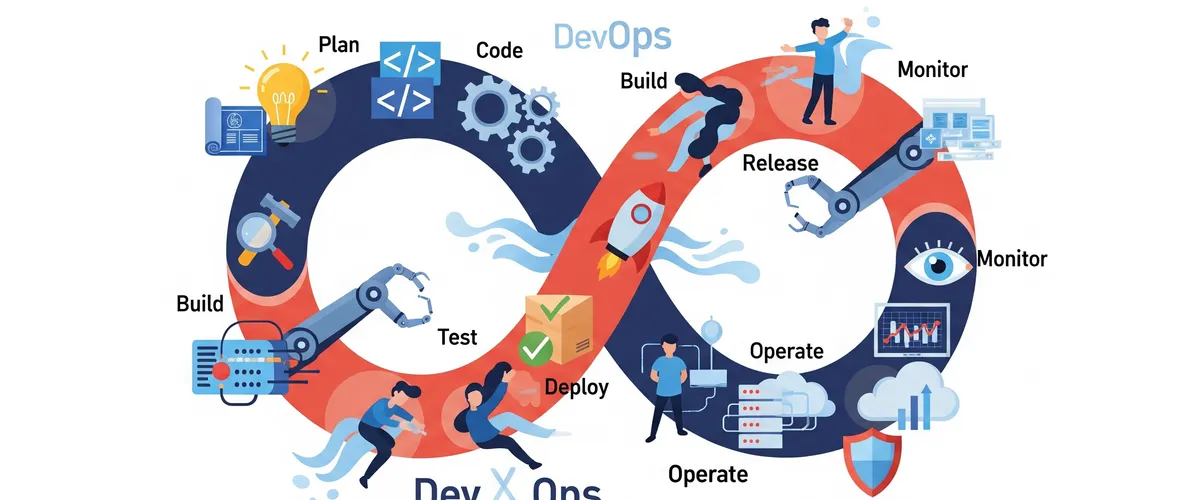
The DevOps lifecycle is a set of procedures that are used to develop, test, and deploy software.
What is DevOps security?
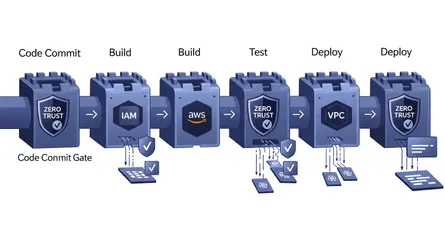
DevOps isn’t only about development and operations teams, as we just said. To get the full benefit of a DevOps strategy, organizations must think about how security fits into the software life cycle. This calls for considering core security from the beginning of the planning process. It also means automating a few security elements so they don’t hold up the DevOps workflow. The right integration-security tooling gets you most of the way to your DevOps security objectives. Effective DevOps security needs much more than new technologies, though. It relies on the cultural shifts DevOps brings, so the work of security teams gets folded in as early as possible. DevOps speeds up processes by closing the gap between development and operations, but the efficiency you gain there can be given back again.
Security used to be the exclusive responsibility of a small team that was pulled in partway through development. Now it is an integrated, shared responsibility inside a collaborative DevOps architecture.
What is the DevOps methodology?
- Continuous Integration (CI): The process of integrating code changes into a shared repository several times a day, catching integration problems early.
- Continuous Deployment (CD): The process of automatically deploying code changes to a production environment several times a day.
- Continuous Monitoring (CM): The process of monitoring the production environment for errors, performance issues, and other problems.
- Continuous Feedback (CF): The process of gathering feedback from users and monitoring data to inform what to build or fix next.
- Continuous Learning (CL): The process of applying lessons from feedback and incidents to improve the next iteration.
References
- What is DevOps? - Atlassian
- What is DevOps? - Amazon Web Services (AWS)
- What is DevOps? - Microsoft Azure
- The DevOps Handbook by Gene Kim, Jez Humble, Patrick Debois, and John Willis
- What is CI/CD? - Red Hat
- What is DevSecOps? - Red Hat
- Agile Manifesto
- Site Reliability Engineering (SRE) - Google
- Microservices - Martin Fowler
- Continuous Integration - Martin Fowler
- What is a CI/CD pipeline? (Internal link, assuming this is a valid path)
- DevOps and Containers - Docker
- The Phoenix Project: A Novel About IT, DevOps, and Helping Your Business Win by Gene Kim, Kevin Behr, and George Spafford
- State of DevOps Report - Puppet (Annual report with insights)