Over-engineering is a common mistake in software development. It adds complexity, stretches out development, and leaves you with features nobody asked for. This post covers how to avoid over-engineering your code, and how to stay committed to writing effective, maintainable software.
What’s the problem with over-engineering?
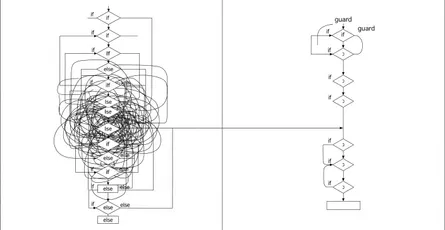
Over-engineering happens when developers add unnecessary complexity to a program. It shows up as solutions that are more complicated than they need to be, features nobody needs, or abstractions that don’t actually help solve the problem in front of you.
- Increased complexity: Overly complicated code is harder to understand, maintain, and debug.
- Longer development times: Unnecessary features take time and resources away from more important work.
- User confusion: Complicated software is harder for people to navigate.
Preventing these problems means understanding what causes them and knowing what to do about it.
What role do context and human factors play?
Context and human factors have a lot to do with the tendency to over-engineer. Developers usually have the best intentions, but a few things push them the wrong way:
- Perfectionism: Wanting a flawless, future-proof solution leads to complexity you don’t need.
- Fear of change: Developers over-engineer trying to anticipate and accommodate every possible future requirement.
- Peer pressure: On a team there can be quiet pressure to show off advanced skills through complex solutions.
Knowing about these pressures helps developers notice them in their own decisions.
What are the symptoms of over-engineering?
Spotting the symptoms is the first step toward fixing them. Here are some common signs:
- Overly complicated code: Complex patterns or structures with no clear benefit.
- Redundant features: Features that are rarely or never used.
- Excessive documentation: Long write-ups for minor components, a sign the focus has drifted from what the software actually does.
- High maintenance overhead: Frequent, time-consuming maintenance caused by the code’s complexity.
Catch these early and you can correct them before they spread.
What causes over-engineering?
Over-engineering has a few common causes:
- Requirements that are not clearly stated: When the ask is vague, developers try to please everyone and build more functionality than anyone needs.
- False assumptions: Believing software is better just because it is more complex or has more features.
- Poor communication: When developers and stakeholders don’t talk enough, priorities drift and solutions get more complex than they need to be.
To address these causes, teams need a culture that puts simplicity and clarity first, better communication, and clear standards.
How to avoid over-engineering?
Avoiding over-engineering comes down to a handful of habits:
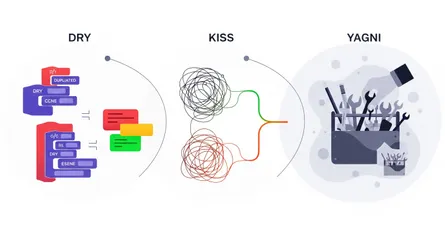
- Keep your eye on the requirements: Work to the requirements you actually have. Don’t add features based on guesses about future developments.
- Choose the simple option: Look for the most straightforward way to meet the requirement. Whenever you can, write simple code people can read.
- Iterate and improve: Work in steps. Rather than building the perfect solution from the beginning, release a minimal viable product (MVP) and improve it based on user input.
- Encourage communication: Keep the lines open with all stakeholders, so the work stays in line with what the business needs.
- Review code frequently: Regular reviews are where you catch complexity that has crept in and cut it out.
How does over-engineering compare to business needs?
The relationship between over-engineering and the business matters here. Business needs should drive software development, not the other way around.
- Value delivery: Focus on delivering value to users. Over-engineering pulls resources toward features that deliver none.
- Cost efficiency: Over-engineered solutions cost more to build and more to maintain. Lining development up with business priorities spends the budget better.
- User satisfaction: Simple, obvious software is easier to like. Complex solutions frustrate users and drive engagement down.
Keep business needs in front of you and the software you build stays both effective and efficient.
Conclusion
Over-engineering derails software projects. It raises complexity, raises costs, and lowers user satisfaction. Learn its signs and symptoms, put a few preventative habits in place, and the software you ship gets easier to maintain and easier to use. Keep it simple, tie development to business goals, iterate on feedback, and work to clear requirements.
References
- Fowler, Martin. “Is Design Dead?” MartinFowler.com, 2004. (Discusses evolutionary design and avoiding premature complexity.), https://martinfowler.com/articles/designDead.html
- “KISS principle (Keep It Simple, Stupid).” Wikipedia, https://en.wikipedia.org/wiki/KISS_principle
- “You Ain’t Gonna Need It (YAGNI).” Wikipedia, https://en.wikipedia.org/wiki/You_aren%27t_gonna_need_it
- “Agile Manifesto.” AgileManifesto.org. (Principles often guide against over-engineering.), https://agilemanifesto.org/